
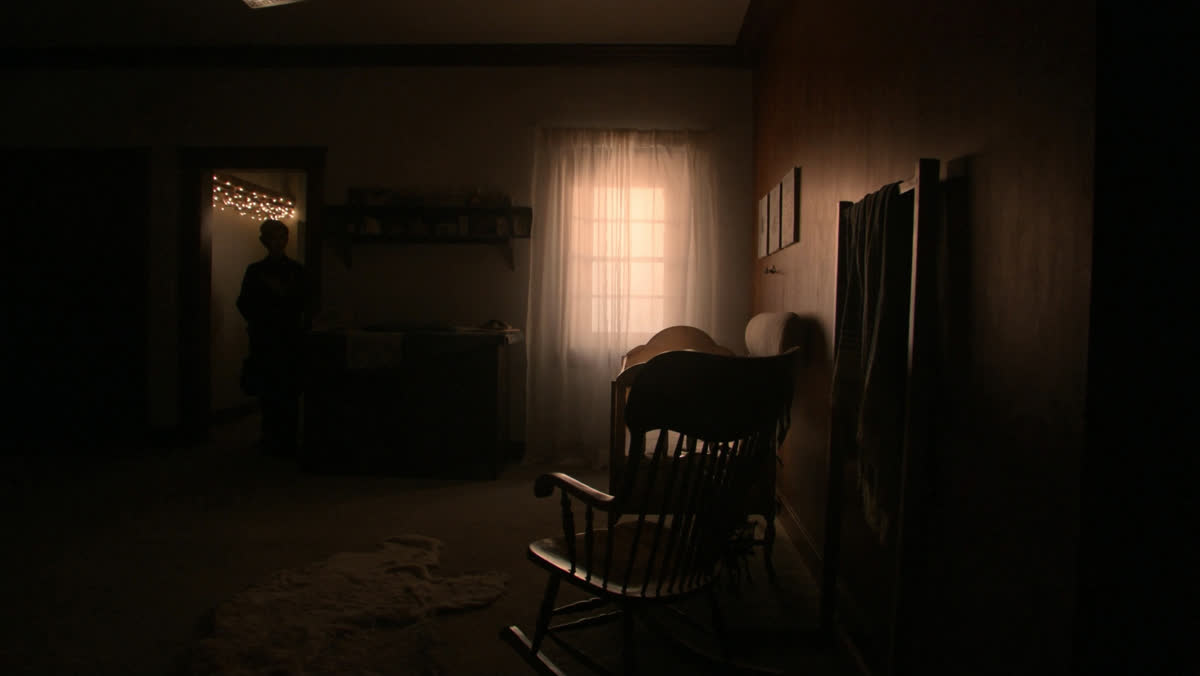
Postpartum depression is not a lack of faith. It is a real medical condition driven by hormone crashes, sleep deprivation, and changes in brain chemistry, and it happens to devoted, praying, deeply committed Christian mothers every day. You can love God, love your baby, and still need treatment, and none of those three cancels out the others.
If you are reading this at three in the morning with a baby on your chest and a weight that will not lift, stay with me. There is a way through, and it begins with naming what is happening.
What is postpartum depression, and how is it different from the baby blues?
Most new mothers feel weepy and unsteady in the first two weeks after birth. That season is common enough to have its own name, the baby blues, and it usually eases on its own as your body recalibrates.
Postpartum depression is different. It lasts longer, it does not lift on its own, and it can begin any time in the first year after delivery, not only in the first days. Common signs include:
- Sadness, numbness, or irritability that stays for more than two weeks
- Feeling disconnected from your baby, or afraid you do not love your baby enough
- Crying you cannot explain or stop
- Being unable to sleep even when the baby sleeps, or wanting to sleep all the time
- Losing interest in things and people you used to enjoy
- Persistent guilt, or the conviction that your family would be better off without you
- Rage that surprises you and then shames you
You cannot diagnose yourself from a list. Your obstetrician, midwife, or family doctor can screen you in a short office visit. If you recognize yourself in more than a couple of those lines, that visit is your next step.
Does the Bible take a worn-out body seriously?
It does, and more plainly than most of us expect. Scripture never treats the body as an inconvenience that a strong enough spirit should be able to override.
“Like a father has compassion on his children, so Yahweh has compassion on those who fear him. For he knows how we are made. He remembers that we are dust.” (WEB)
Psalm 103:13-14
He remembers. You are the one who forgot. Six weeks of broken sleep, a body still healing from birth, and a hormonal drop steeper than almost anything else the human body does, and you are asking why you cannot pray with your old energy.
Look at how God handled Elijah. The prophet had just seen fire fall from heaven, and days later he was sitting under a tree asking God to end his life. God did not open with a lecture about faith.
“He lay down and slept under a juniper tree; and behold, an angel touched him, and said to him, ‘Arise and eat!’ He looked, and behold, there was at his head a cake baked on the coals, and a jar of water. He ate and drank, and lay down again. Yahweh’s angel came again the second time, and touched him, and said, ‘Arise and eat, because the journey is too great for you.'”
1 Kings 19:5-7
Sleep, then food, then more sleep, then more food. The conversation came later. God treated a depleted body as a real problem worth solving first.
Why does it feel like I am failing God?
Because postpartum depression lies with a very specific accent. It rarely says “you are sad.” It says “you are ungrateful,” “you prayed for this baby and look at you,” “a woman with real faith would feel joy.”
Notice what those accusations have in common. They are vague, they are total, and they leave you nowhere to go. Conviction from God is specific and always comes with a door: here is the thing, here is the way back. Shame only circles.
“He has said to me, ‘My grace is sufficient for you, for my power is made perfect in weakness.’ Most gladly therefore I will rather glory in my weaknesses, that the power of Christ may rest on me.”
2 Corinthians 12:9
Paul was not describing a weakness he had talked himself out of. It stayed. And the presence of Christ was not withdrawn because of it. Your weakness right now is not disqualifying you from anything.
“Yahweh is near to those who have a broken heart, and saves those who have a crushed spirit.”
Psalm 34:18
Near. Not waiting at a distance for you to pull yourself together first.
Is it okay for a Christian mother to get professional help?
Yes. Faith and professional care are not in competition, and treating them as rivals has cost Christian women years they did not need to lose. You would not pray over a broken arm and skip the doctor. A postpartum brain running on empty deserves the same seriousness.
Therapy, medication, or both are decisions for you and a qualified clinician who knows your history and, if you are nursing, your feeding plan. What Scripture does not do is forbid you from receiving help. Paul traveled with a physician and called him beloved.
Telling your doctor the truth is not a failure of trust in God. It is often the most faithful thing you will do this month.
What can I actually do this week?
- Book the appointment. Not next month, this week. Say the words out loud: “I think I have postpartum depression and I want to be screened.”
- Tell one real person. Your husband, your mother, a friend from church. Depression’s first move is isolation, and one honest sentence breaks it.
- Fix sleep before you fix anything else. Ask someone to take a four-hour stretch so you can get one unbroken block. This is treatment, not indulgence.
- Eat something with protein in it every morning. Elijah got bread before he got answers.
- Get outside once a day, even for ten minutes. Stroller, porch, driveway.
- Shrink your prayers. One line. “Help me.” That counts.
- Call the Postpartum Support International HelpLine at 1-800-944-4773 if you want to talk with someone who works with this every day.
What if I am having thoughts that scare me?
Many new mothers have sudden, unwanted, intrusive thoughts about harm coming to the baby. These are frightening, they are more common than anyone tells you, and having one is not a confession of what you want. Tell your doctor. Bring it into the light where it loses its power.
But if you are having thoughts of ending your life, or of harming your baby, or you are seeing or hearing things others do not, that is a medical emergency and it needs help today, not after you have prayed harder about it. Call or text 988, the Suicide and Crisis Lifeline, available around the clock. Go to an emergency room. Wake your husband. Getting help immediately is not a lapse in faith. It is the loving thing to do for yourself and for your child.
How can the people around me help?
Most of them want to and have no idea how. Give them a specific job.
“Bear one another’s burdens, and so fulfill the law of Christ.”
Galatians 6:2
Practical asks that actually help: take the baby from nine to one so I can sleep, bring dinner Tuesday, sit with me while I make the doctor’s appointment, come do my laundry and do not comment on how tired I look. When someone asks what they can do, hand them one of those instead of saying you are fine.
What do I pray when I have nothing left?
“In the same way, the Spirit also helps our weaknesses, for we don’t know how to pray as we ought. But the Spirit himself makes intercession for us with groanings which can’t be uttered.”
Romans 8:26
On the days when prayer is a sigh and nothing more, that sigh is carried. You are not responsible for producing eloquence right now.
Here is one you can borrow:
Father, I am tired in a way I do not have words for. I love this baby and I cannot feel it today, and that frightens me. Thank you that you know how I am made and you have not turned away. Give me the courage to ask for help, and give me people who will actually show up. Hold my child when my arms have no strength in them. Carry me until I can walk. Amen.
What if this takes a long time?
It might. Postpartum depression is treatable, and most mothers recover with the right care, but recovery is usually gradual. You will notice it first in small things: an hour that felt normal, a laugh that surprised you, a morning that was not dreaded.
“He will feed his flock like a shepherd. He will gather the lambs in his arm, and carry them in his bosom. He will gently lead those who have their young.”
Isaiah 40:11
Read that last line again. There is a different pace for the mothers. The gentleness you need in this season is not a concession being made reluctantly. It is how the Shepherd works.
Make the call to your doctor this week. That is the assignment. Everything else can wait.
If it helps to keep Scripture close while you wait for that appointment, our collections on Bible verses for postpartum anxiety, loneliness as a new mom, and newborn baby stress are written for exactly these nights.