
Thirteen years. Joseph was seventeen when his brothers stripped him and dropped him into a dry cistern, and he was thirty when he finally stood in front of Pharaoh. Everything anyone has ever preached about Joseph’s patience happened inside those thirteen years — years of ordinary mornings with no evidence that any of it was working.
That is the part most retellings skip. It is also, probably, the part you came looking for.
How long was Joseph in the pit and the prison?
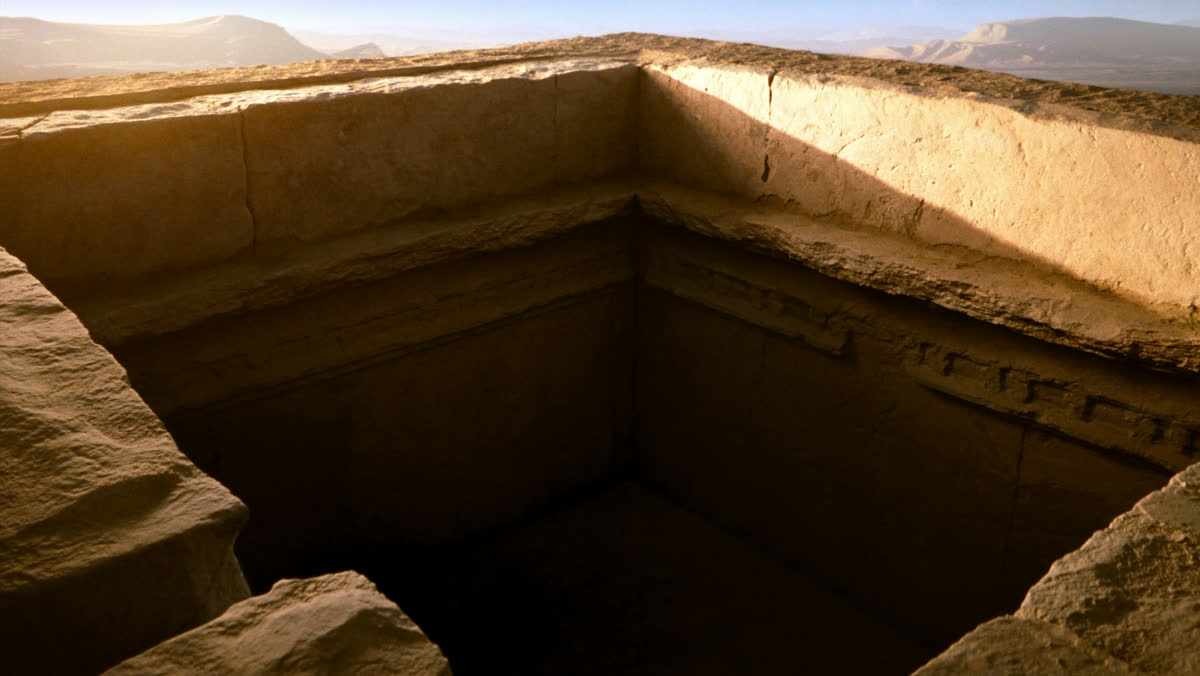
The pit itself was short. Hours, maybe a day. Scripture reports it without drama:
“When Joseph came to his brothers, they stripped Joseph of his coat, the coat of many colors that was on him; and they took him, and threw him into the pit. The pit was empty. There was no water in it.” — Genesis 37:23-24 (WEB)
What lasted was everything after. Sold to traders. Sold again to an Egyptian official. Years running another man’s household. Then a false accusation, and prison — described as the place where the king’s prisoners were bound.
The Bible hands you two ages and lets you do the arithmetic yourself. Genesis 37:2 says Joseph was seventeen when the trouble started. Genesis 41:46 says he was thirty when he stood before Pharaoh. Thirteen years between those two sentences.
And the reunion with his brothers, the scene the whole story is famous for, came later still. By the time they were standing in front of him, seven years of plenty had passed and two years of famine (Genesis 45:6). Roughly twenty-two years from the pit to the reconciliation.
Twenty-two years. If Joseph was your age when it began, do that math on your own life and notice where it lands you.
What did Joseph do while nothing was changing?
He worked.
That is the unglamorous answer the text keeps giving. He managed Potiphar’s household. In prison he was handed responsibility for other prisoners. When two of Pharaoh’s officials turned up rattled by dreams they could not read, Joseph noticed their faces and asked them why they looked so sad.
A man with every reason to be entirely absorbed in his own case looked at somebody else’s face and asked a question about it. The waiting had not made him small.
There is no record of Joseph running a ministry out of that cell or having a single breakthrough moment. He showed up, did the work in front of him, and stayed interested in people. Faithfulness inside a long wait usually looks that plain from the inside. It only looks like a story from the outside, and only later.
Did Joseph ever try to get himself out?
Yes. And this matters if you have picked up the idea that real patience means never asking.
When Joseph interpreted the cupbearer’s dream, he attached a request to it. Remember me when things go well for you. Mention me to Pharaoh. Get me out of this house. He named the injustice out loud — he said he had been stolen away and had done nothing to deserve the dungeon.
He asked a person with access to help him. Here is what that produced:
“Yet the chief cup bearer didn’t remember Joseph, but forgot him.” — Genesis 40:23
And then the next chapter opens like this:
“At the end of two full years, Pharaoh dreamed: and behold, he stood by the river.” — Genesis 41:1
Two more years. The one man who could have helped simply forgot he existed. Joseph’s most reasonable, most faithful move bought him twenty-four additional months of nothing.
If you have done the reasonable thing — sent the application, made the call, asked the person who promised they would help — and heard nothing back, you have not fallen out of God’s story. You are standing in the exact part of it that Genesis takes the trouble to write down.
Where was God while Joseph waited?
The narrator answers that before you have time to ask it.
“But Yahweh was with Joseph, and showed kindness to him, and gave him favor in the sight of the keeper of the prison.” — Genesis 39:21
Notice what that sentence does not say. God did not take him out of the prison. God was with him in it, and the kindness arrived inside the circumstances instead of by ending them.
Psalm 105 looks back on those same years and refuses to soften them:
“They bruised his feet with shackles. His neck was locked in irons, until the time that his word happened, and Yahweh’s word proved him true.” — Psalm 105:18-19
Shackles. Irons. And then: until the time. The psalm holds the pain and the appointed hour in a single breath, and it never suggests the first was less real because the second eventually came.
What was forming in Joseph during those years?
Years later, with a position he never applied for and two sons, Joseph named them. The second name is the one to carry with you:
“The name of the second, he called Ephraim: ‘For God has made me fruitful in the land of my affliction.’” — Genesis 41:52
Not after my affliction. In the land of it. Something grew in the country that was supposed to finish him, and he thought it was worth naming a child over.
Then, at the very end, facing the brothers who started all of it, he did not deliver a speech about how the suffering had secretly been a gift. He said something harder and more honest than that:
“As for you, you meant evil against me, but God meant it for good, to bring to pass, as it is this day, to save many people alive.” — Genesis 50:20
He kept the word evil. He did not rename what they did to make it easier to forgive. He held their evil and God’s purpose in the same sentence without letting either one swallow the other.
And it took him more than two decades to be able to say it. Nobody says Genesis 50:20 on day one, from the bottom of the cistern. If you cannot say it yet about your own situation, that is not a failure of faith. That is a timeline.
What if my waiting never ends in a palace?
This is the honest question, and it deserves a straight answer: some waiting does not end the way Joseph’s did.
Faithful people wait for a marriage, a child, a clean scan, a son to come home, and sometimes the answer never arrives in this life. Anyone who guarantees you a palace at the end of your pit is promising you something the Bible never promised.
What you are actually given is smaller and much sturdier. God was with Joseph in the prison. That sentence holds whether or not your circumstances turn, and it is the one worth building on.
One more thing, plainly. If the waiting has moved past discouragement into something heavier, and you have been having thoughts of ending your life, please treat that as its own emergency rather than as a spiritual failure. In the US you can call or text 988, the Suicide & Crisis Lifeline, any hour of the day. Faith and professional care are not competing for your loyalty. A counselor and a pastor can both be part of how you get through this particular year.
How do you stay faithful when the wait is this long?
- Do the next real thing. Joseph ran a household, then a cell block. Wash the dishes. Answer the email. Small faithfulness still counts as faithfulness when nobody is watching.
- Keep asking. He asked the cupbearer directly and specifically. Asking for help is not a shortage of trust. Ask again.
- Stay curious about other people. He noticed two worried men and asked what was wrong. A long wait shrinks you unless you keep looking outward on purpose.
- Tell the truth about what happened. Joseph never called betrayal by a gentler name. You do not have to either.
- Mark the small mercies. He named a child after fruitfulness he found in the wrong country. Write down one thing this month that grew where you did not plant it.
- Say the real number out loud. Tell one trusted person, “it has been three years.” Waiting gets much heavier when nobody else knows how long it has actually been.
What can you pray in the middle of a long wait?
God, I have been waiting longer than I expected to, and I am tired of explaining it to people. You know exactly how long it has been. I am not asking to be told the reason. I am asking You to be with me here, the way You were with Joseph in that prison, and to keep me from turning bitter or small while I wait. Help me do the next honest thing today. And if something is growing in me that I cannot see yet, let it grow. Amen.
What should you hold on to today?
“Wait for Yahweh. Be strong, and let your heart take courage. Yes, wait for Yahweh.” — Psalm 27:14
The psalm says wait twice. That repetition is not decoration. The second one is there for the second time you need it — the day after your best plan failed and the person who promised to help you forgot.
Joseph’s thirteen years are recorded so you would know that the distance between the promise and the palace is normal, survivable, and not proof that God has left. Count your own years honestly. Say the number to someone. Then go do the next thing in front of you.